Two hours to save a tribe
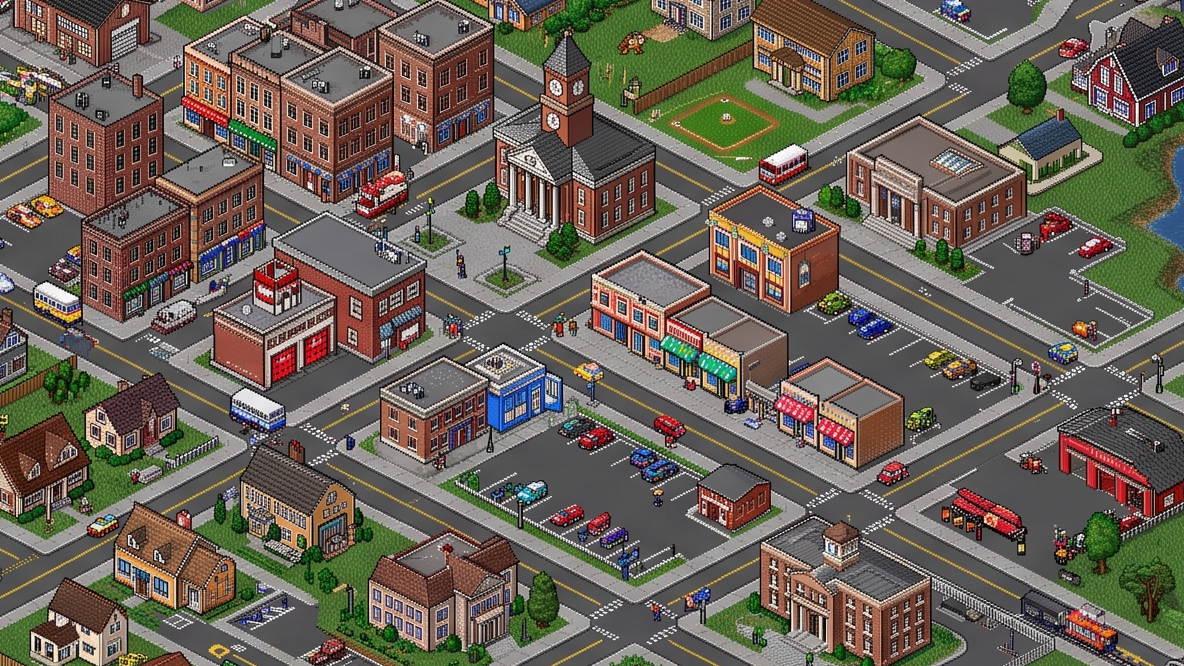
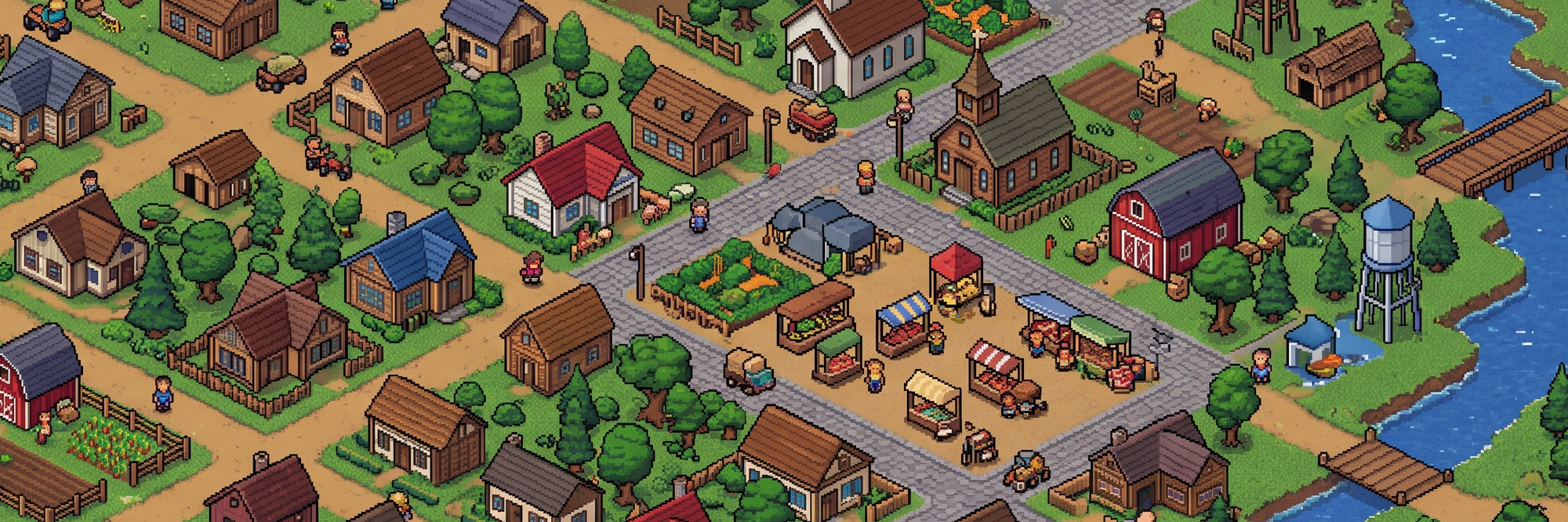
Imagine a three-page briefing, a map, and a facilitator sitting across the desk. You are a development-aid worker for the Moros, a tribe of about 500 people at the southern rim of the Sahel. They live on millet and cattle. Women, children and the elderly work the fields; the men work the herds. Life expectancy is low. Famines are not rare.
You have 20 simulated years to make their lives better, about two hours of real time.
You never touch the computer. You ask the facilitator questions, and they read back the answers. There are 45 variables you can ask about: cattle, millet yields, birth rate, cash in the bank, rainfall, groundwater level, the intensity of the tsetse plague. Some you won’t think to ask about at all.
You can act, too. The programme has 25 possible actions, and nobody gives you the list. You invent your own solutions: build wells, set up a field hospital, buy or sell cattle and millet, buy fertilizer. Invent something the programme doesn’t have, like tourism or extra money from the UN, and the facilitator politely refuses.
Your budget is a loan. You are expected not only to spend, but to earn it back.
The goal is vague on purpose: “improve living conditions.” The real job is to avoid disasters, and the disasters are slow. Groundwater falls while wells run. Cattle multiply until the pasture is gone, and overgrazing doesn’t heal.
Nobody explains how the system works. The links between variables are yours to discover, and feedback arrives late.
The most reasonable decision in the world
Healthcare is the obvious first move. Nobody argues with fewer deaths. In a run described by Dietrich Dörner, whose school built the experiment, exactly this happened. The herd outgrew the pastures, and in year 17 the whole population disappeared.
Every step was sensible. That is the problem: good local decision → delay → side effect → side effect of the side effect → catastrophe.
Dörner’s team has a small museum of these. One team announced that Moros slaughter 150 cows a year, cows grow 25% a year, so 1,000 cows is enough, and they sold everything above it. Revenue was excellent for a while. Then reality arrived: a young herd doesn’t grow 25%, sleeping sickness kills cattle, and the tribe was growing and eating more. The team ended up buying cattle back, aiming for about 2,800.
Another team stopped spraying against the tsetse fly because the number of flies hadn’t changed: “Before we had about 30,000, now we have 30,500.” But “no change” was the effect. The insecticide was holding the population still. Once it stopped, the flies rose and the cattle suffered.
A third team did the textbook thing. Water was short, so they drilled deep wells. Flies were up, so they hired a spraying company. Cattle increased. Then the herd ate all the grass, and the vegetation never came back. Dörner’s comment: “who risks, wins” works, but only once and only in the short term.
Managers vs. students
The 1989 researchers asked a blunt question. Take 45 directors and division heads from large German and Swiss industrial and trading companies. Put them against 45 students from the University of Bamberg. Does a career in management help here?
It did. By the end the managers had more capital, more cattle, more people and more surviving vegetation, with fewer disasters.
The interesting part is how they thought.
Students got one piece of information and immediately changed something. Managers asked several questions first, built a picture, and only then acted. They collected 3.12 answers per decision; students collected 2.67. A small number, but a statistically significant one. Managers also waited longer between gathering and acting.
Nothing in the managers’ toolbox was secret. The kinds of actions were mostly the same. The difference was the order of thinking.

Three ways to lose
Dörner catalogued the patterns of losing participants.
1. Ballistic behaviour. Fire and forget. You make a decision and never check whether it worked. One team hired nutrition specialists and ran a campaign to change what the Moros eat. It worked: they ate less beef, which would have let the team sell more cattle. The team never looked. They moved on to the next problem. In other experiments of this series, participants checked the effects of only 30–50% of their actions.
2. Linear thinking. Something grows, so you extend the line.
Dörner notes that participants found it extremely hard to move from the state of a system to its dynamics. They kept extrapolating in a straight line while the system had clearly stopped being straight.
3. More decisions instead of more thinking. When things get worse, the instinct is not to understand more. It is to do more.
not understanding → must do something → action → worse → must do something harder
When systems slipped out of control, the number of decisions went up. The number of questions did not.

Why we do it
Dörner’s explanation is not stupidity. It is feelings.
Complex situations make people feel incompetent, and action is the quickest cure. One of his examples says it plainly: “The Moros are suffering, so we need to help them quickly.” Action frees us from the feeling of weakness. Under time pressure, reflection gets thin.
The cure can be worse than the disease in the opposite direction too. Some groups spent 90 minutes studying the situation before making a single decision, believing they had to know everything first. Dörner calls this analysis paralysis. It is the same insecurity wearing a more respectable coat: detailed planning feels like doing something important.
So the managers’ edge was not patience for its own sake. It was the right amount of looking, followed by a small step.
Heuristic expertise
The authors called the managers’ advantage heuristic expertise. The managers did not necessarily know more about MORO. They knew how to behave when the system is complex and you don’t understand it:
- don’t react to the first signal;
- use several sources of information;
- separate exploring from intervening;
- look at links between variables;
- change parameters gradually;
- watch the consequences and correct your model.
The authors’ idea is that years of dealing with new, dynamic problems build this abstract skill.
A fair caveat: the managers were about 25 years older than the students, and intelligence and life experience were not properly controlled. Later reviews point this out. Management experience is a plausible explanation, not a proven one.

Where is the complexity threshold?
A popular retelling says people stop deciding rationally after some number of variables. MORO has no such number, and neither does Dörner’s work.
His famous Lohhausen experiment was far bigger: a virtual town with about 2,000 variables, managed by 48 participants for ten virtual years.
Dörner’s idea is subtler. Trouble does not come from the count of variables. It comes when interacting, dynamic, opaque and delayed links exceed your ability to build an inner model of the system.
A hundred independent indicators can be easy to manage. Five can be a nightmare:
price → demand → production → stock → price
Add feedback loops and delays, and five variables behave like a small weather system. Dörner’s name for the combination is complexity + dynamics + intransparency.
The takeaway
“The human brain can’t handle complexity” is the lazy summary. The result is better than that.
People can manage a system they don’t fully understand. The quality of the management depends less on what they know than on how they treat what they don’t know.
A good manager works in short loops:
observe → hypothesize → check several sources → small intervention → watch → update the model → repeat
A bad one runs this loop instead:
signal → explanation → action → new signal → new action → crisis → even more action
It is the same advice as modern systems thinking, the OODA loop and fast feedback, found in a 1989 experiment on a tribe that never existed.
Next time something goes wrong at work, count your questions before you count your decisions. And if nothing changed after your last action, check whether nothing was the point.
Sources: the manager-vs-student comparison is Schaub & Strohschneider (1989), “Can managers really manage better?”. The case details are from Dörner & Güss (2022), who collected 24 kinds of human error from the same family of simulations.